Most behavioral health EHRs were designed around an outpatient visit: a clinician, a client, a 50-minute session, a note, a claim. Residential programs don’t work that way. Your people live on site. Care happens across three shifts, in hallways and common rooms, at med pass and at bedtime. Direct-care staff, nurses, clinicians, and supervisors all touch the same person in the same day — and each of them needs a different slice of the record.
Condor Outcomes was built for that reality. It is Condor’s own EHR — not a behavior add-on that has to be wired into somebody else’s chart — and it puts a live Behavior Scorecard on top of the clinical record so the whole team works from one source of truth.
What a residential behavioral health EHR has to do
When agencies of roughly 20 to 200 staff tell us what broke in their last system, the list is remarkably consistent. A behavioral health EHR for residential care has to handle five jobs at once:
- Document behavior in the moment. If staff have to wait until the end of a shift to write it up, details are lost and patterns surface days late.
- Keep the medical record with the behavior record. Medical history, medications, and clinical notes belong in the same place as incidents and behavior trends.
- Know who is in the building. Census and capacity can’t live on a whiteboard reconciled at month end.
- Handle incidents without losing the trail. Incidents need fast capture, notifications, follow-up, and an audit trail.
- Prove outcomes. Funders, boards, and regulators want evidence, not anecdotes, and they want it without a week of spreadsheet work.
Condor is organized around a simple arc that covers all five: Capture, See, Act, Prove.
Capture: documentation that keeps up with the shift
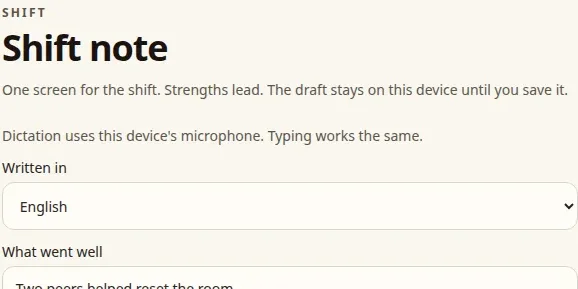
Floor staff log positive and negative behavior points, notes, and incidents in seconds from the web or the mobile app. Two taps record a moment, and logs typed offline file when the connection returns. Because capture happens during the shift rather than after it, the record is more complete and far more current.
Clinical documentation in the same record
The EHR side of Condor holds structured medical records, longitudinal medical history, medication administration records (MARs), and clinical notes such as body maps and scar sheets. Nursing and program staff see the same resident, not two disconnected files. You can see real screens on the Condor EHR page.
See: a live picture instead of last week’s report
The live Behavior Scorecard updates across campus as staff log points. Supervisors see who needs attention now, which units are having a hard afternoon, and how today compares with the last few weeks. Role-based dashboards give each person the view they need — direct care, nursing, clinical leadership, and executives don’t all need the same screen.
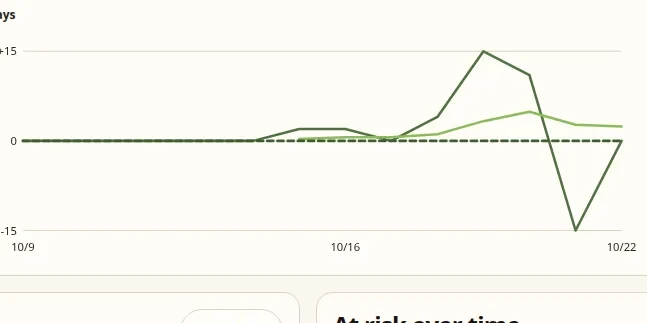
Census and capacity tracking sits in the same platform, so occupancy and behavior context are read together rather than in separate tools.
Act: intervene while the moment is still open
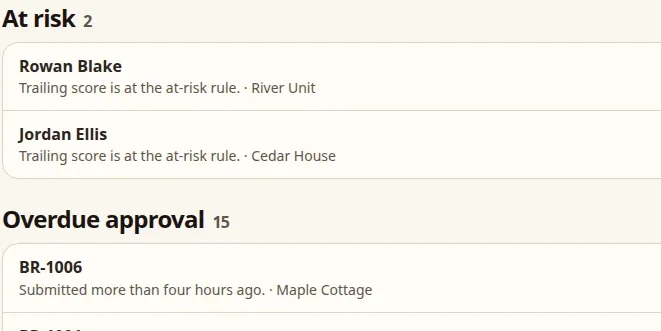
Data only matters if it changes what happens next. Condor shows at-risk flags on the dashboard, supports points and rewards for positive reinforcement, and keeps follow-ups attached to the record. When something serious happens, incident management captures it as a case and links the behavior and health context so reviewers don’t have to rebuild the story from memory.
Medications
Medication administration lives in the EHR through eMAR/MARs. E-prescribing through DrFirst: approved and coming soon. It is not live yet. Today, med passes, PRN follow-ups and med errors are on the eMAR in the same record. Details are on the integrations page.
Prove: outcomes reporting funders can trust
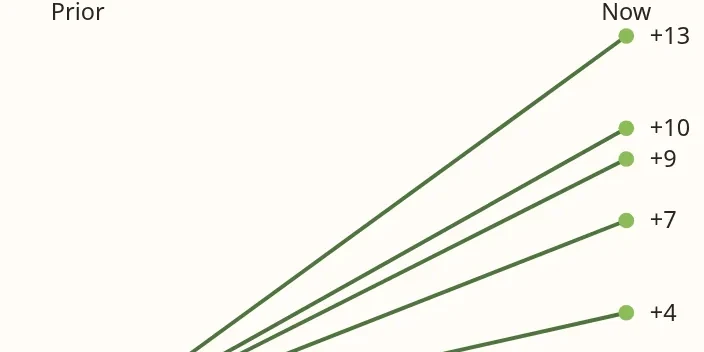
Because behavior is captured as structured data during the shift, reporting stops being a quarterly reconstruction project. Trends, progress matrices, and exportable, grant-ready reports come from the same data supervisors use every day. If your funding depends on showing change over time, read more about outcomes reporting software for human services.
Secure, expiration-dated family portals let you share the right information with families and external stakeholders without emailing attachments around.
Security built for programs that get audited
Behavioral health records are among the most sensitive data an organization holds. Condor’s controls: two-factor authentication, role-based access and granular permissions, encryption in transit and at rest, and field-level audit logs. The security page covers the details your compliance lead will ask about.
Who this behavioral health EHR is for
Condor is designed for mid-market residential behavioral-health and human-services organizations of about 20 to 200 staff, including:
- Residential treatment centers and youth residential programs
- Group homes and community residences
- Special schools and day programs that run on behavior support plans
- Secure and other high-accountability programs that cannot lose the documentation trail
If you are a much larger, multi-state enterprise with complex billing requirements, ask any vendor — including us — to show those workflows live before you sign. Our guide on how to choose a behavioral health EHR walks through what to test.
Real-world proof
Condor’s platform was used during the residential operations of Lincoln Hall (residential program in transition), where leadership described the system as one of the most important developments in the organization’s recent history. The full case study covers what changed when paper logs gave way to a live campus scorecard.
Pricing that a residential program can plan around
Scorecard is $299/month billed annually ($369 month-to-month), and Scorecard + MAR is $449/month billed annually ($549 month-to-month). White-label and partner options available, contact us. Start a 14-day free trial: no card, sign up yourself. After the trial there are 3 days of grace, then read-only with your data kept. We can also walk through the live Scorecard and EHR with your program in mind. See pricing or try the demo.